When I first started affiliate marketing, I made a mistake that looked as if I were saving time back then. I told myself I didn’t need an email list. Posting content felt like enough. The result was painful: I lost commissions I could’ve recovered with simple follow-up, and I wasted months rebuilding momentum every time a platform went quiet.
At the same time, I get why people skip email. Setting up forms, automations, and compliance can feel like homework when you’re just trying to earn your first commission. In 2026, there are real alternatives that can work, especially early on.
In this post, I’m going to lay out the honest pros and cons of not building an email list, and what I’d do instead if I were starting again today.
SEO Key Takeaways: skipping an email list, the real trade-offs
- Skipping email can mean faster launch because you can publish and test offers today.
- It often means lower upfront cost, since you can start with free traffic channels and basic tools.
- The big trade-off is platform dependency, a rule change can cut reach overnight.
- Without email, you usually get fewer repeat clicks, which hurts second and third chances to convert.
- You also lose first-party signals (like email click behavior) that help you improve offers and angles.
- A strong middle ground is using fast discovery channels first, then adding light email capture once traffic is steady.
- Many beginners stall on setup, so having an alternate path (the way I approach “Quiet Commissions”) keeps you moving while you build skills and clarity.
What it really means to skip building an email list (and why beginners do it)
When people say “build an email list,” they usually mean more than collecting a few addresses.
A typical setup includes a sign-up form, a landing page, a lead magnet (some kind of free value), an email platform, and a basic welcome sequence. Then there’s compliance, unsubscribe links, and the simple habit of emailing consistently without sounding spammy.
Beginners skip it for practical reasons:
Tech confusion is the obvious one. Another is pace. Social platforms and search feel like you can get traction faster, while a list starts at zero and grows one subscriber at a time.
Some people also hate the idea of “sending newsletters.” They picture pushy sales emails or awkward small talk in inboxes. I did too.
And then there’s tool fatigue. New affiliate marketers already juggle links, tracking, content, and learning what converts. Adding an email platform can feel like carrying one more bag up a hill.
The hidden work behind list building most people do not plan for
The list itself isn’t the hard part. The moving parts are.
Here’s what most people end up doing once they take email seriously:
- Picking a provider and setting up the domain and sender details
- Creating a freebie that matches the offers they promote
- Writing a short welcome series so new subscribers don’t go cold
- Tagging or segmenting subscribers based on what they clicked
- Tracking links and learning what topics create intent
Even a good list needs upkeep. Bounces add up, inactive emails drag down deliverability, and you have to pay attention to whether your emails land in inboxes or spam.
None of this is “bad,” but it’s a real commitment. If you don’t plan for it, it becomes a guilt project.
When skipping the list can be a smart short-term move
I’m not here to shame anyone for skipping email. In a few situations, it can be the right call, as long as you treat it as a short-term choice.
It can be smart when:
- You have no budget and you need proof of concept before paying for more tools.
- You don’t have offer clarity yet, you’re still figuring out what you even want to promote.
- You’re testing niches and you need fast feedback on what people respond to.
- You want momentum, because progress keeps you learning.
I’d underline one phrase: short-term. Skipping email can help you start, but it rarely helps you stay stable.
Pros of not building an email list (speed, simplicity, and faster feedback)
When you skip email, you’re choosing speed over structure. That trade can help early on.
Here are the main upsides, with real affiliate examples.
Start faster with less tech, less cost, and fewer rules to learn
If I’m not building a list, I can publish a review, a tutorial, or a comparison page right away. No landing pages. No lead magnets. No automation headaches.
That matters because early affiliate marketing is mostly testing. I want to see:
Does this niche respond? Do people click? Do they buy?
Example: If I’m promoting a keyword tool, I can write “How to find low-competition keywords” and add my affiliate link. I’ll learn quickly whether the topic pulls clicks.
Yes, many email tools have free plans now, but the setup still slows beginners down. Skipping it removes friction and keeps the focus on learning the basics: traffic and offer match.
Ride “discovery” channels where strangers find me (TikTok, YouTube, SEO)
In 2026, discovery is a real alternative to email, at least at the start.
Short video is still a fast testing ground. YouTube remains a trust builder, especially for tutorials and reviews. SEO can bring in buyer traffic from searches like “best X for Y,” but it takes longer to kick in.
The upside is simple: I don’t need a list to reach new people. The platform can put my content in front of strangers.
The downside is also simple: strangers don’t stick around unless I give them a reason to.
If I’m consistent, discovery channels can act like a faucet. Turn it on with content, traffic flows. Stop posting, and the faucet slows.
Cons of not building an email list (what you lose by not owning the audience)
This is the part I wish I’d understood earlier. Skipping email doesn’t just remove work, it removes options.
It’s like building a shop inside someone else’s mall.
You might get foot traffic, but you don’t control the rules, the rent, or whether the doors stay open.
You do not own the relationship, one platform change can wipe out my reach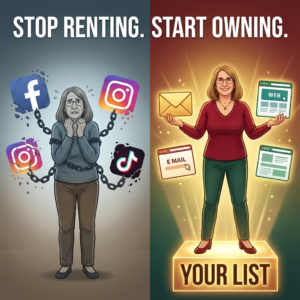
When you rely only on social platforms, you’re renting attention.
- Algorithms shift.
- Policies change.
- Accounts get flagged.
- A format that worked last month might flop next month.
- When reach drops, affiliate clicks drop right with it.
This hits affiliates hard because we live on thin margins. If my content gets half the views, I don’t lose half my income, I might lose almost all of it for that offer.
Email isn’t magic, but it’s direct. If someone gave you permission to contact them, you’re not begging a platform to show you’re next post.
You miss follow-up, repeat sales, and the “second chance” to convert
Most people don’t buy on their first visit. They compare. They get distracted. They open ten tabs and forget all of them.
Email gives you a second chances.
Without it, you can’t easily send:
- A follow-up comparison (Product A vs Product B)
- A “what I’d choose if I were starting” note
- A case study after I’ve used the tool for two weeks
- A reminder when a price changes or a bonus ends
This is where my early mistake cost me. I’d get the click, then lose the sale because the person wasn’t ready. If I had even a simple 3-email sequence, some of those sales would’ve come back.
I won’t promise specific conversion rates because they vary by niche and trust level.
I will say this: repeated exposure, when it’s helpful and not pushy, usually lifts results.
My tracking and optimization can get weaker without first-party data
In 2026, tracking is messy compared to the old days. With privacy changes and fewer third-party cookie signals, I value anything that helps me understand intent.
Email clicks are first-party behavior. If someone clicks “best beginner option,” that tells me what they care about. If nobody clicks my “advanced features” email, I know I’m attracting beginners.
Without email, you rely more on platform analytics. Those can be useful, but they’re not always the full story. And they rarely tell you what someone is thinking, just what they viewed.
Email also lets me test angles faster. I can send two different messages to different segments and see what gets action. That feedback loop is harder when I’m only posting into the void and hoping the algorithm plays nice.
If you skip the list, what should I do instead? Best alternatives for new affiliate marketers
If you’re not building a list yet, you still need a plan that doesn’t fall apart. Here’s what I recommend for beginners in 2026:
Pick one main channel to learn deeply, then add one backup channel you control (usually a simple website). Keep it light at first. The goal is steady progress, not a perfect system.
It also helps to know what’s working right now. Current affiliate marketing trends keep pointing to video, smaller niche audiences, AI support tools for content, and better measurement without relying on third-party cookies. That doesn’t remove the need for trust, it just changes how trust is built.
But it’s important to remember that if you don’t build an email list, you MUST be doing something to market your business. Just joining a business won’t make sales.
Ask yourself “HOW am I going to market my business?”
Perhaps it might be one of these methods?
Content channels that can work without email: YouTube, TikTok, SEO, and communities
- Medium / SubStack: You can publish articles on this channel and either have them behind a paywall, or let anyone read them. (The ‘pay’ is pretty small – I find it better to just let people read for free.)
- YouTube: Best for evergreen tutorials and reviews. If you can explain clearly on camera (or even with voiceover and screen share), YouTube can send you buyer traffic for months or years. The trade-off is time. Filming and editing add work, although tools like Fliki can help.
- TikTok: Best for fast testing and quick reach. You can find winning hooks and topics faster here than almost anywhere. The trade-off is stability. Trends fade, and attention is short.
- SEO (blogging or SEO-first videos): Best for long-term, compounding traffic. If you can write helpful posts or publish search-based videos, SEO can become my most steady source of clicks. The trade-off is patience. It can take months to rank. However, to speed up content generation I use a tool called RightBlogger.
- Amazon Books: Become a published author and go where people are looking to buy. Here’s a system that will help you get your books published – but be warned, it’s hugely competitive to make any sales!
- Communities (Reddit, Discord, Facebook Groups): Best for trust if I’m willing to show up and be useful. Communities punish spam, but they reward real help. The trade-off is time and tact. I have to earn the right to share links. You can learn about setting up your own Facebook group here.
A quick way to choose: If you like writing, start with blogging. If you like teaching, start with YouTube. If you like quick experiments, start with TikTok. If you’re good at conversation, start with communities like a Facebook group.
The safer middle path: build audiences fast, then add a “light” email capture later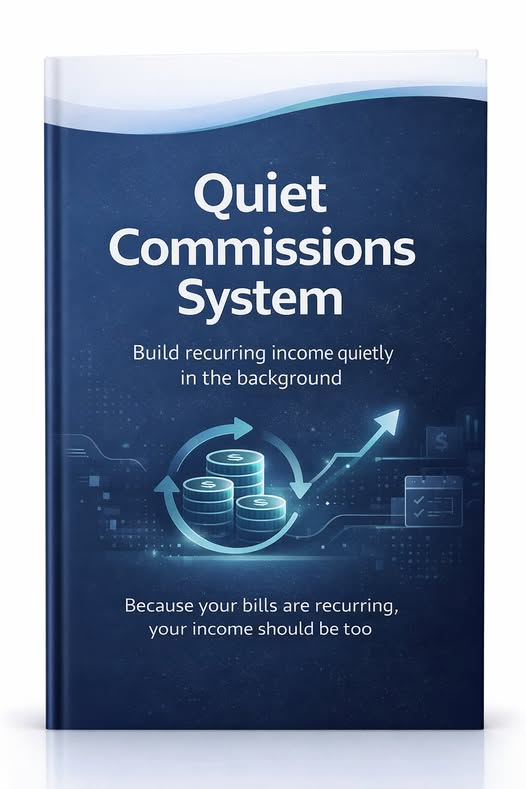
This is the approach I suggest now because it respects reality. Many beginners quit because the setup feels like a maze.
So start with discovery and clarity first. Then add email when you have a clear reason.
My “light email capture” looks like this:
- One simple page
- One simple freebie that matches the offer
- A short welcome sequence (3 to 5 emails)
- No weekly newsletter pressure unless I want it
The freebie doesn’t have to be fancy. A checklist, a mini guide, a comparison sheet, or a “what to buy and why” page works if it helps the reader decide.
I can actually give you a rather attractive lead magnet, like the one on the right when you join the Quiet system with me, here.
This hybrid path fits the Quiet Commissions idea I follow: keep friction low, keep actions simple, and build assets I control as I go. I don’t need to build everything on day one. I just need to keep moving.
You can do this with a simple mailing platform called LeadsLeap. If you have a LeadsLeap account and join the Quiet Commission System with me (check for my name on the page you buy from), I will set you up with a LeadsLeap optin page and emails to follow-up with your leads.
You will also receive a lead magnet to attract people to join your business.
- One big attraction of LeadsLeap is that you can have unlimited subscribers as opposed to other auto-responders where the monthly price increased as the number of subscribers increases.
- Another is that you bypass all the technical DMARC, DKIM etc setup which is daunting for anyone, especially for beginners.
- The disadvantage is that subscribers have to confirm their optin, but LeadsLeap insist that this means you have a more committed subscriber.
Click the image below to open your LeadsLeap account.

FAQs: skipping an email list for affiliate marketing
Do I need an email list to make my first commission?
No. I’ve made commissions without one. A good piece of content with the right offer can convert on the spot. Email helps more with follow-up and repeat exposure.
When should I start an email list?
I’d start when I have one of these: steady traffic, a clear niche, or one offer that converts. If I’m getting consistent clicks, it’s time to stop letting those visitors disappear.
What’s the easiest email setup for a beginner?
One opt-in page, one relevant freebie, and a short welcome sequence. Keep it basic. Add tags or segments later, once you know what people are clicking.
Is it okay to use only social media for affiliate marketing?
It’s okay for a start, but it’s risky long-term. Social is rented attention. I prefer to pair social with at least one asset I control, like a website or an email list.
What if I hate writing emails?
Keep them short. Write like you text a friend. If writing still feels awful, use email only for key moments, like a new tutorial, a comparison, or a limited promo. Get AI to write first drafts for you and edit them to your own tone. (Start with the free version of ChatGPT.)
What about privacy and compliance basics?
Use a real email provider, include an unsubscribe link, and only email people who opted in. Keep your claims honest and don’t buy lists. If you promote affiliates, disclose it clearly.
Can I do affiliate marketing with just YouTube or SEO?
Yes. Both can work without email, especially for review and tutorial content. Email just adds stability and a second chance to convert visitors who weren’t ready.
Conclusion
Skipping an email list can be a reasonable way to start, especially if setup stress would stop you from publishing at all. The cost is that you don’t own the relationship, and you give up follow-up that often drives extra commissions.
I learned that the hard way. Not building a list early didn’t just slow me down, it made me restart over and over.
My advice now is simple: pick one traffic channel for the next 30 days, publish consistently, and track where your sales comes from,